Gemstone Luster vs Brilliance: Clearing the Confusion Buyers Often Miss
When people describe a gemstone as “shiny,” they rarely mean just one thing. In reality, that shine comes from different optical effects that are often misunderstood, even by experienced buyers. At Pretty Facets, education is a core part of how gemstones are presented and evaluated. As a Sri Lankan brand working directly with natural stones, the focus has always been on clarity, accuracy, and helping buyers understand what they are truly seeing, not just what looks attractive in photos.
One of the most common points of confusion is the difference between Gemstone Luster and brilliance. These terms are frequently used interchangeably, but in gemology, they describe entirely different interactions between light and stone. Understanding that difference changes how a gemstone is judged, priced, and appreciated.
What Is Gemstone Luster?
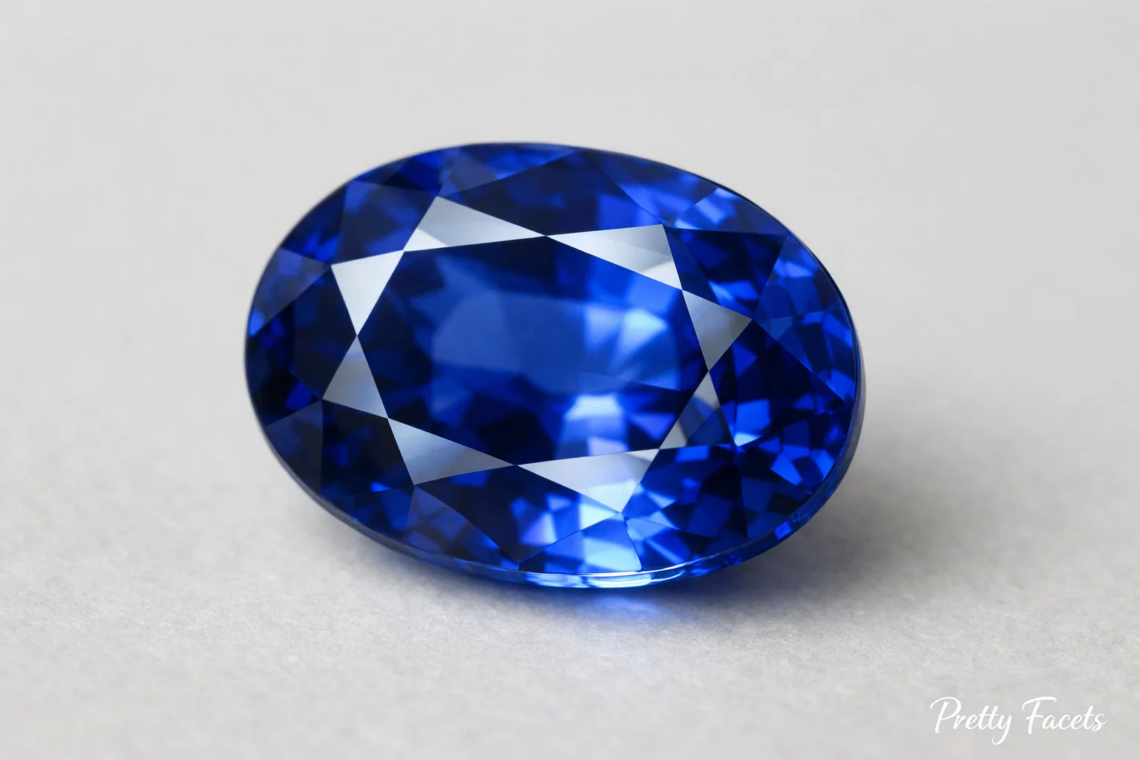
In gemological terms, Gemstone Luster refers to how light reflects from the surface of a stone. It has nothing to do with what happens inside the gemstone. Instead, it describes the quality and character of surface reflection when light hits a polished face.
Luster is primarily influenced by:
- The gemstone’s refractive index
- The quality of polishing
- The smoothness and integrity of the surface
This is why two stones of the same material can display noticeably different luster. A well-polished sapphire will reflect light cleanly and sharply, while a poorly finished one may appear dull, even if the material itself is high quality.
Gemologists classify luster using terms such as vitreous (glass-like), silky, greasy, or dull. Corundum, including Sri Lankan sapphires, typically exhibits a vitreous luster when properly polished. Quartz may show a softer surface reflection, while stones like moonstone exhibit a distinctive sheen due to their internal structure, yet their surface luster remains a separate characteristic.
What matters most is that Gemstone Luster is evaluated externally. It is visible immediately, even before a stone is tilted or examined from multiple angles. This makes it the first visual impression a gemstone gives, but not necessarily the most informative one.
What Is Gemstone Brilliance?
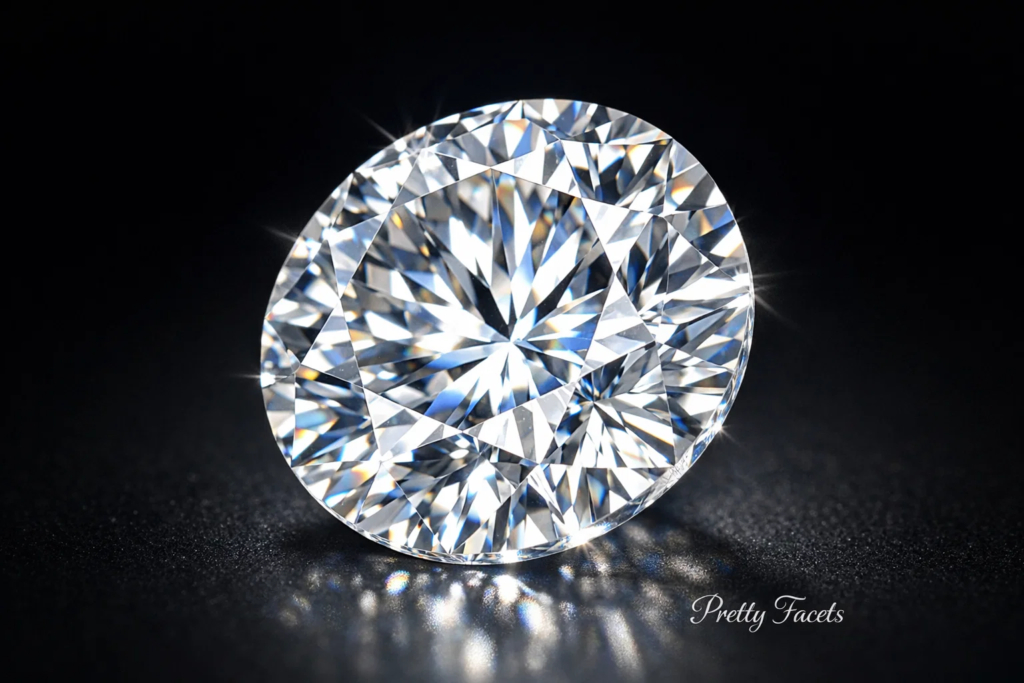
Brilliance describes something very different. It refers to the amount of white light that enters a gemstone, reflects internally, and returns to the viewer’s eye. Unlike Gemstone Luster, brilliance is an internal optical effect.
Brilliance depends heavily on:
- Cut proportions and symmetry
- Facet angles
- How efficiently light is returned rather than lost
A gemstone with excellent brilliance appears lively and bright when moved. Light seems to bounce within the stone, creating flashes and depth. If the cut is too shallow or too deep, light escapes through the sides or bottom, reducing brilliance even if the surface polish is flawless.
This distinction explains why some stones look glossy but lifeless, while others appear vibrant even under low light. Luster alone cannot compensate for poor internal light performance.
The Gemological Institute of America (GIA) provides a detailed explanation of how light behavior inside gemstones affects brilliance and overall appearance, particularly in faceted stones .
Why Buyers Confuse Luster and Brilliance
The confusion exists because both properties contribute to what people casually call “shine.” When a gemstone is photographed under strong lighting, surface reflection can exaggerate perceived quality. This often leads buyers to assume that a glossy surface equals a well-cut stone, which is not always true.
In online listings especially, Gemstone Luster is easier to display than brilliance. Surface reflection shows up instantly in images, while internal light performance is harder to capture without movement or expert photography. As a result, many stones appear more impressive on screen than they do in person.
This is why Pretty Facets emphasizes individual stone assessment and transparent descriptions. By separating surface qualities from internal performance, buyers gain a more realistic understanding of what they are purchasing. You can learn more about this evaluation philosophy on the About Pretty Facets page.
Gemstone Luster vs Brilliance: The Real Differences That Matter
While both qualities contribute to visual appeal, Gemstone Luster and brilliance operate independently. One is not a substitute for the other, and neither guarantees overall quality on its own. Understanding their differences allows buyers to judge gemstones more accurately instead of relying on surface-level impressions.
Key Differences Between Luster and Brilliance
- Gemstone Luster is about surface reflection and polish quality
- Brilliance depends on internal light return and cut precision
- Luster is immediately visible; brilliance reveals itself through movement
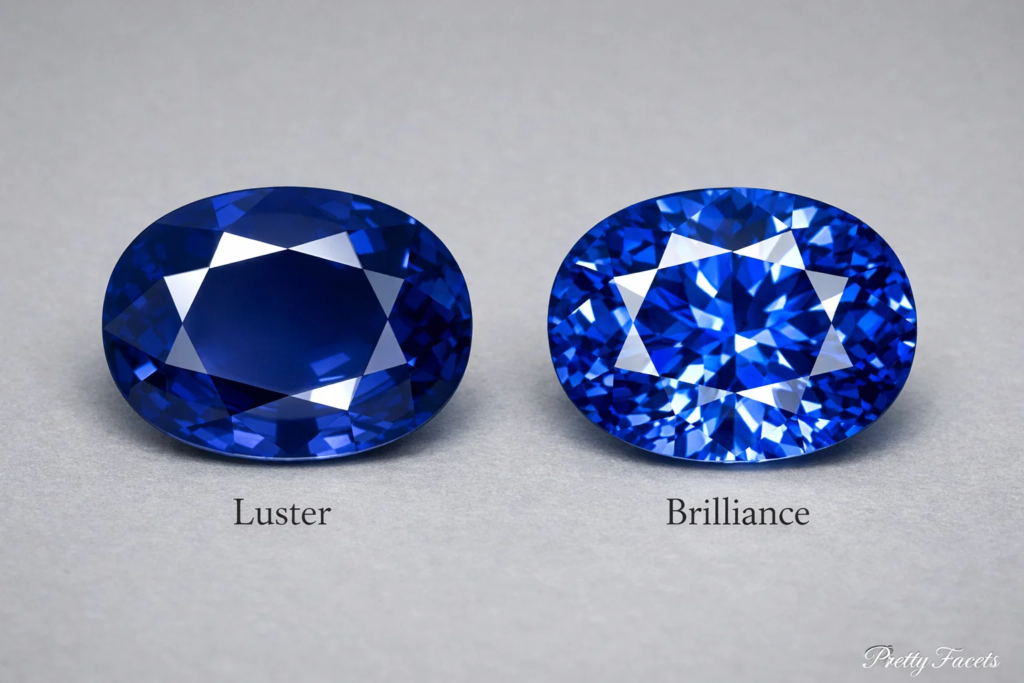
- A stone can have strong luster but weak brilliance
- Brilliance can never overcome poor material transparency
This distinction is especially important when comparing stones that look similar in photos but perform very differently in real light.
Why Some Gemstones Show High Luster but Limited Brilliance
Not all gemstones are meant to maximize brilliance. Many Sri Lankan stones are intentionally cut to highlight surface beauty or unique optical effects rather than internal light return. Cabochon-cut gemstones are a prime example.
Moonstone, star sapphire, and cat’s eye chrysoberyl rely heavily on surface interaction with light. Their appeal comes from sheen, stars, or bands of light rather than brilliance. In these cases, Gemstone Luster becomes the dominant factor, while brilliance plays a minimal role.
Judging these stones by diamond-style standards leads to incorrect conclusions. A cabochon with excellent surface finish and even reflection may be far more valuable than a faceted stone with stronger brilliance but weaker material character.
How Cut and Polish Shape Visual Performance
Cut and polish are often discussed together, but they influence different outcomes. Polish directly impacts Gemstone Luster, while cut determines brilliance.
A perfectly proportioned gemstone with poor polishing will still appear dull on the surface. Likewise, a highly polished stone with incorrect angles may look glossy yet flat. Both aspects must work together, but they are evaluated separately by trained eyes.
Lighting also plays a major role in how these properties are perceived. Natural daylight reveals surface reflection differently than artificial lighting, which is why proper grading conditions matter. Pretty Facets explores this in detail in its guide on how lighting affects gemstone color and appearance, explaining why controlled lighting is essential for accurate evaluation.
How Pretty Facets Evaluates Luster and Brilliance
At Pretty Facets, each gemstone is assessed individually rather than by checklist descriptions. Gemstone Luster is examined under neutral light to evaluate surface consistency, reflection sharpness, and polish integrity. Brilliance is judged through movement, tilt, and light return efficiency.
This approach reflects Sri Lanka’s long lapidary tradition, where stones are shaped according to material behavior, not mass-market formulas. The goal is not to force brilliance where it does not belong, but to reveal the best possible visual performance for each gemstone.
Only stones that meet these standards are selected for the Pretty Facets collection, ensuring transparency between appearance, description, and real-world performance. You can view the curated selection directly in the Pretty Facets gemstone collection.
How Buyers Should Use This Knowledge When Choosing a Gemstone
Buyers often focus on sparkle alone, but understanding Gemstone Luster helps refine expectations. Faceted stones benefit from strong brilliance and clean surface reflection, while cabochons depend almost entirely on surface quality.
Instead of asking whether a gemstone is “shiny,” buyers should consider how and why it shines. This shift in perspective leads to better decisions, fewer disappointments, and a deeper appreciation of natural gemstones.
Conclusion: Shine Is Not a Single Quality
Gemstone beauty is multi-dimensional. Gemstone Luster and brilliance describe different interactions with light, and neither should be evaluated in isolation. When buyers understand this distinction, they move beyond marketing language and begin to see gemstones as gemologists do.
That level of understanding is what transforms a purchase into an informed choice, and it is the foundation of how Pretty Facets presents every stone it offers.
Faqs
1. Is gemstone luster the same as sparkle?
No. Gemstone luster describes how light reflects off the surface of a gemstone, while sparkle usually refers to internal light return, known as brilliance. A stone can appear glossy without having strong brilliance, especially if the cut does not allow light to return efficiently.
2. Can a gemstone have high luster but still look dull?
Yes. A gemstone may have excellent surface polish and strong luster but appear visually flat if the internal cut does not support light return. This is common in stones that are polished well but cut too shallow or too deep.
3. Why do cabochon gemstones focus more on luster than brilliance?
Cabochon-cut gemstones are designed to highlight surface-related effects such as sheen, stars, or chatoyancy. Since they lack facets, brilliance is not the goal. In these stones, gemstone luster plays a far greater role in overall beauty and value.
4. Does gemstone luster affect value?
Yes. Poor luster caused by weak polishing or surface damage can reduce a gemstone’s appeal and value, even if the material quality is high. Strong, even luster signals careful finishing and proper handling during cutting.
5. How can buyers judge luster when shopping online?
Buyers should look for clear, neutral-light images that show surface reflection without harsh glare. Descriptions from transparent sellers like Pretty Facets also matter, as experienced gem evaluators separate surface qualities from internal performance when presenting a stone.
6. Should buyers prioritize luster or brilliance?
It depends on the gemstone type and cut style. Faceted stones benefit from balanced brilliance and surface reflection, while cabochons rely almost entirely on gemstone luster. Understanding the purpose of the cut leads to better buying decisions.



One comment on “Gemstone Luster vs Brilliance: Clearing Confusion of Buyers”