Gem markets in Sri Lanka: Practical guide for buyers
Sri Lanka’s gem markets in Sri Lanka are where miners, traders and lapidaries meet and where you can still buy raw material at source if you know what to look for. This first half of the guide focuses on the markets to visit, practical timings, and how to prepare so you avoid common mistakes. If you plan to buy rough or cut stones, read these Pretty Facets guide carefully before you go.
Why visit the gem markets in Sri Lanka?
The value of a gem often becomes obvious only in person. Visiting gem markets in Sri Lanka puts you face-to-face with rough sapphires, spinels, garnets and other material before it reaches retailers. You’ll see how stones are presented, hear local price signals, and learn how cutters estimate yield knowledge photos and listings can’t give you. For impartial advice on treatments and buyer protections, consult an authoritative source such as the Gemological Institute of America’s buying guides.
Top markets to prioritize
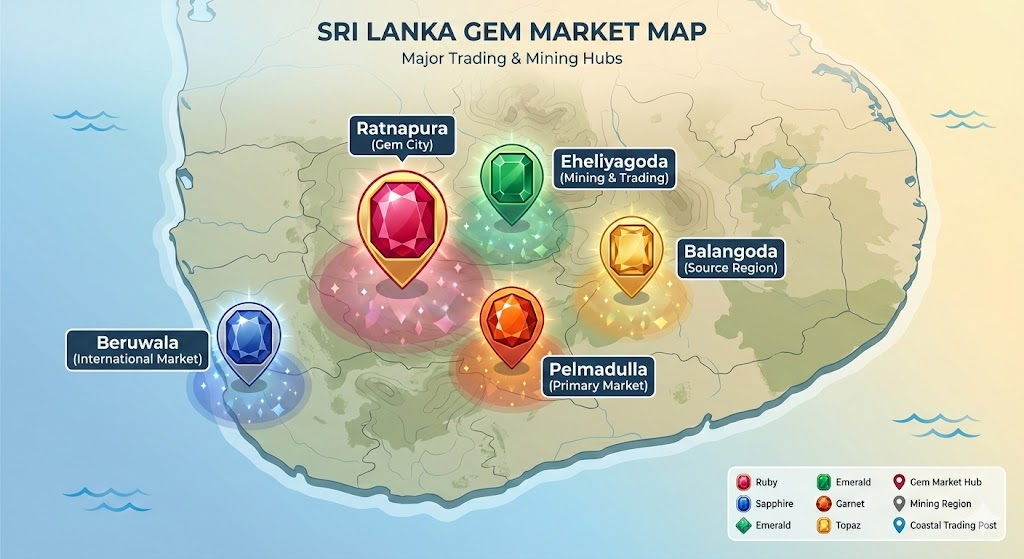
Not all markets are equal. If you have limited time, prioritize these locations where supply, variety and specialist dealers converge.
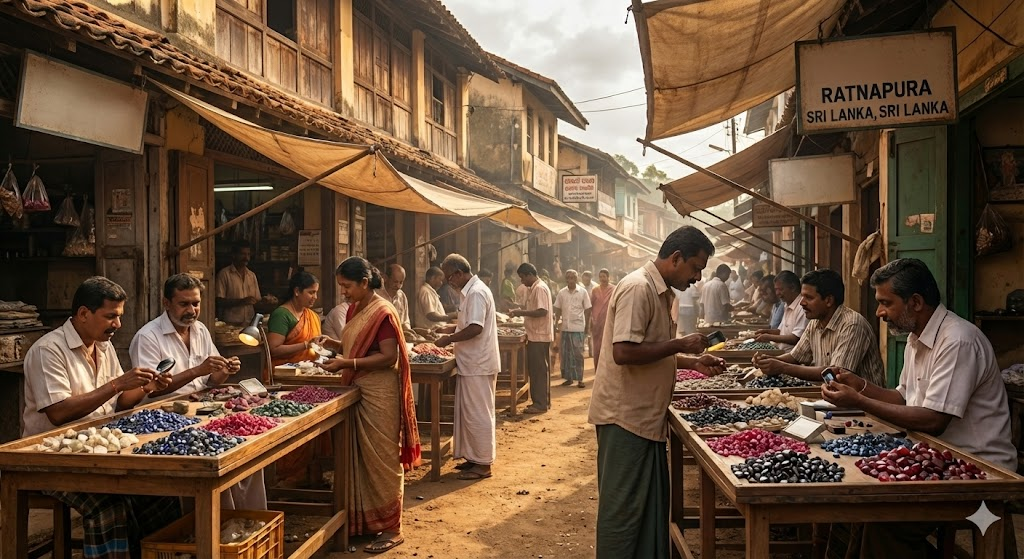
- Ratnapura (the City of Gems): The busiest and most important hub. Early morning trade around the clock tower and nearby lanes is where miners and large buyers meet.
- Heraniyawaka / Saviya Mawatha areas: Close to Ratnapura’s core; many fresh rough lots are shown here at first light.
- Eheliyagoda: Smaller and calmer than Ratnapura, but notable for consistent sapphire and chrysoberyl availability.
- Beruwala / Gintota (coastal market): Convenient if you’re based near Colombo; a good place to compare prices without travelling inland.
- Regional markets (Pelmadulla, Balangoda, Kahawatta, Wellawaya, Okkampitiya): Worth visiting when you’re near mining zones; these often surface unusual local finds.
These markets are active most mornings; major deals typically happen between dawn and late morning. Plan to be on-site early. (More on exact opening days and times will follow in the second half.)
Gem Market Timings (Days & Hours)
(Based on current field data and Sri Lankan trade references)
| Gem Market | Opening Days | Typical Time |
| Ratnapura (Clock Tower area) | Daily | 6:30 am – 10:00 am |
| Ratnapura (Mango Tree & Demuwawatha) | Daily | 10:00 am – 1:00 pm |
| Heraniyawaka | Daily | 7:00 am – 10:00 am |
| Balangoda | Daily | 6:00 am – 10:00 am |
| Nivithigala | Daily | 7:00 am – 10:30 am |
| Eheliyagoda | Daily | 7:00 am – 11:00 am |
| Beruwala (China Fort) | Daily except Friday | 10:00 am – 5:00 pm |
| Ginthota / Galle | Daily | 10:30 am – 2:30 pm |
| Passara | Daily | Morning |
| Bibile | Daily | Morning |
| Lunugala | Daily | Morning |
| Okkampitiya | Tuesday | 7:30 am – 11:00 am |
| Bakamoona | Wednesday | 7:30 am – 10:00 am |
| Naula | Tuesday | 7:30 am – 10:00 am |
| Embilipitiya | Wednesday | 7:30 am – 11:00 am |
| Badulla | Sunday | 7:00 am – 12:00 pm |
| Pelmadulla (afternoon market) | Daily | 4:00 pm – 6:00 pm |
Notes / Interpretations:
- The “Everyday” label means the market operates daily.
- Some markets (like Passara, Bibile, Lunugala) have only “morning” listed without exact times in those cases, you may need to add a note (e.g. typical morning hours, check locally).
- The coastal/port-zone markets (Beruwala, Ginthota) tend to run later in the morning and into the afternoo, which isn applicable for buyers based near Colombo or travelling from the coast.
What to do before you arrive
Preparation reduces risk and saves money. Follow these checks before stepping into any manik pola (local term for “gem market”):
- Book a trusted local: A reputable local guide or a dealer with verifiable references reduces the chance of mislabeling or treatment fraud. If you’re inexperienced, never shop alone.
- Set a realistic budget and carry small bills: Cash is commonly used for market trades; larger purchases can be handled with documented invoices.
- Know the basics of treatment: Heating, diffusion, glass-filling and irradiation are common. Ask sellers directly and, for important buys, insist on written disclosure or lab testing. For independent background on treatments and buyer questions, GIA’s resources are reliable.
- Bring a daylight-capable loupe and a notebook: A 10× loupe and quick notes on weight, color and seller details help you compare lots later.
- Plan logistics: Early mornings, variable roads, and limited banking mean you should have transport, a secure place for purchases, and a plan to ship or certify stones if you buy high-value pieces.
Quick look: Initial checks at the stall
When a seller opens a brifka or tray, use these quick validations:
- Natural surface and crystal form: Rough should show natural faces or crystal structure, not perfectly smooth glass.
- Color zoning and sheen: Examine in natural light for evenness uneven spots can signal low yield after cutting.
- Ask about yield: How many carats of cut stone can the rough realistically produce? Good sellers will give a range, not a promise.
Understanding Local Trading Culture in Sri Lanka’s Gem Regions
The experience of exploring gem markets in Sri Lanka becomes easier when you understand how local trading culture works. Most negotiations happen through quiet conversations, quick inspections and short price adjustments. Sellers usually place rough stones in small paper packets called “thambili,” and you are expected to examine clarity, heat signatures and semi-polished edges without rushing. Many first-time visitors prefer to compare stones from different tables before deciding. This helps them judge whether the price range is fair. The markets in Ratnapura, Beruwala and Eheliyagoda each run slightly differently, but the general rhythm remains similar. Early morning activity is intense and that is often the best moment to see fresh parcels arriving from local mines.
When walking through Ratnapura gem market, you will notice how buyers, miners and traders communicate through hand signals and covered gestures. These signs help negotiate final rates without drawing attention. Foreign visitors are not expected to use these signs, but understanding them makes the experience more comfortable. The mix of locals, exporters and collectors gives the area a constant flow of new inventory throughout the week. Because of the volume available, Ratnapura remains the most reliable location for those wanting to see a wide spread of sapphires, spinels, garnets and rare stones. This is also where many buyers begin their search for high-value material, including Padparadscha sapphires. A detailed breakdown of this gemstone can be found in this internal guide: Padparadscha Sapphire Guide
How to Evaluate Rough Stones Before Buying
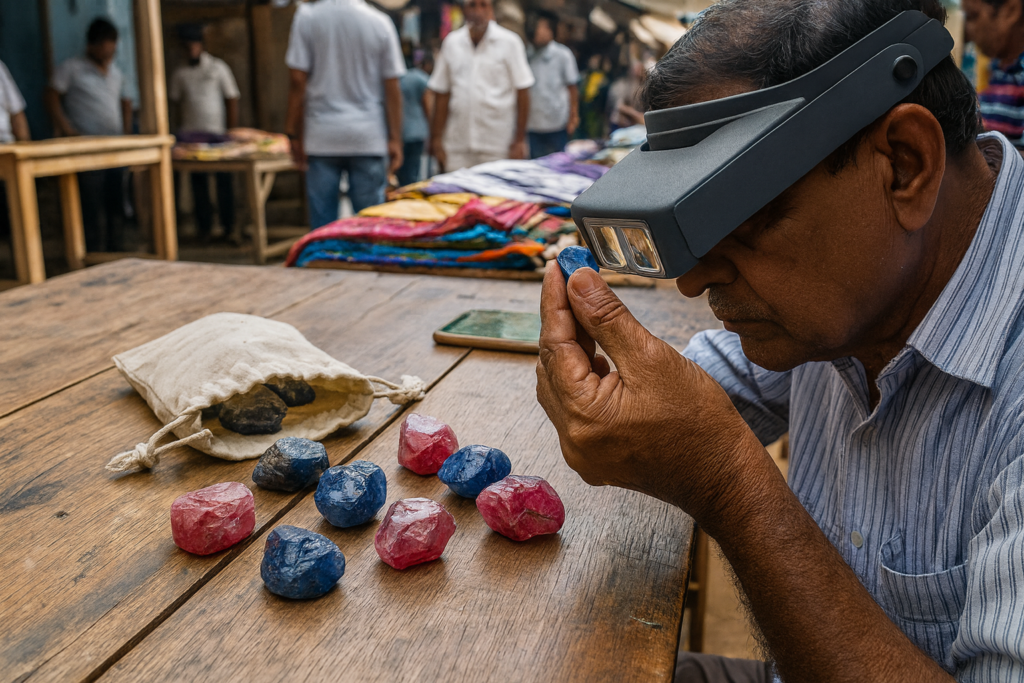
Every visitor planning to buy from gem markets in Sri Lanka should know the basics of evaluating rough material. First, examine transparency by holding the stone toward natural light. Even rough stones reveal their clarity levels when viewed from different angles. Second, check for fractures that may affect cutting results. Local cutters often explain how each stone will behave during shaping and polishing, and their insight can help you calculate real value. Third, look at the stone’s natural color tone. A rough sapphire will still show notable saturation even before cutting. Buyers searching for rare colors or clean crystals visit the markets early because the best stones move fast.
Local sellers allow you to view stones with a loupe, and you can also request guidance from gemologists. If you want a deeper understanding of gem testing, this internal guide explains the process clearly: Gem Labs in Srilanka. It helps visitors of gem markets in Sri Lanka learn how to verify authenticity through reputable labs, understand heat treatments and confirm natural origins. Authentic certification becomes essential when you are preparing to export stones or planning to sell them later.
Best Practices for Safe and Fair Gem Buying
The environment in gem markets in Sri Lanka is friendly, but it is still important to protect yourself during transactions. Keeping your purchase within your knowledge range is the first step. If you are not comfortable identifying a stone alone, take a local expert or hire a licensed gem guide. Avoid rushing through deals, especially when the seller pressures for quick decisions. Real sellers will always allow time for inspection. Many seasoned buyers inspect stones in natural sunlight before finalizing payment. This helps them confirm real color and transparency.
Carrying a digital scale and light source can also help. While this is optional, it gives you an extra layer of confidence. When making larger purchases, verify documentation from recognized labs rather than accepting handwritten notes. Many traders willingly accompany you to a trusted testing center if you request it. This way, both sides maintain transparency. Because trade in gem markets in Sri Lanka is interconnected, reputation matters, and traders are careful to protect their standing.
Why These Markets Attract International Buyers
The reason foreign buyers repeatedly return to gem markets in Sri Lanka is the combination of supply diversity, quality and direct access to mine-to-market material. Some come for rare colors. Others come for the cultural experience, which is unlike any gem trade region in the world. The presence of Ratnapura gem market, Beruwala gem market, and Eheliyagoda gem market gives visitors three strong options within reachable distance. Each market has its own identity. Beruwala is known for cut stones and polished pieces. Ratnapura is known for volume and variety. Eheliyagoda has a more local, small-scale feel that attracts experienced collectors.
International buyers also appreciate that these markets support open negotiation. Prices are not fixed, and both sides can agree on fair value without pressure. For many, this is the most appealing part of exploring gem markets in Sri Lanka. It creates a transparent environment where buyers can learn, compare, question and decide at their own pace.
Conclusion
Visiting gem markets in Sri Lanka offers direct access to some of the world’s most sought-after gemstones. The combination of local mining culture, transparent negotiation and high-quality material makes the experience valuable for collectors, jewelers and new buyers. Understanding how to evaluate stones, how to interact with traders and where to find reliable certification helps you navigate the markets with confidence. Whether you are exploring Ratnapura, Beruwala or Eheliyagoda, each area presents unique opportunities to discover rare and beautiful gems at their source. Add for any other queries contact Pretty Facets Team.
FAQs
What is the best time to visit gem markets in Sri Lanka?
Early morning is usually the best time because new parcels arrive from mines, giving you the largest selection.
Are gem markets safe for foreigners?
Yes, these markets are friendly and open, but you should still use common-sense precautions and verify stones through reliable gem labs.
Do traders allow gemstone testing before purchase?
Most traders agree to testing at recognized labs, ensuring authenticity and fair value.
Which market is best for beginners?
Ratnapura is ideal because it offers the widest variety and makes comparison easier for new buyers.
Can I buy certified gems directly from the markets?
You can purchase stones and then take them for certification at professional gem labs, which many traders support.