The Sparkling Legacy of Beruwala: A Deep Dive into the World’s Oldest Gem Exchange
Sri Lanka is famously known as “Rattnadeepa,” the Island of Gems. While many jewelry lovers recognize the finished pieces displayed in high-end boutiques, the true story of these stones begins in a far more grounded and historic setting. Located in the China Fort (Pathe) district of Beruwala, you will find the world’s largest and oldest open-air gem market.
History marks every street corner here, and the global sapphire trade finds its rhythmic pulse in this place. For centuries, this coastal town has served as the ultimate gateway for the earth’s most beautiful treasures to transition from the muddy pits of the interior to the display cases of the world’s elite.
The Ancient Roots of China Fort and the Moorish Heritage
The story of Beruwala is inseparable from the history of maritime trade. As early as the 8th century, Arab merchants arrived on these shores, guided by the monsoon winds and the allure of precious stones. These traders did not just come to buy: they came to settle, creating a vibrant community that would eventually become the world’s most respected open-air gem hub. The district known as China Fort, or Cheena Kotuwa, earned its name because of the historic interactions with Chinese traders who frequented the port to exchange their silks and ceramics for the legendary Blue Sapphires of Ceylon.
The descendants of these original Arab merchants still run the market today. They have passed down the secrets of gem identification through dozens of generations. In this open-air gem environment, a trader can often tell the origin of a stone just by looking at its “silk” or its internal crystalline structure. This ancestral knowledge is the backbone of the market, ensuring that even in a world dominated by high-tech machinery, the human eye remains the ultimate authority.
The Logistics of a Million Dollar Street Corner
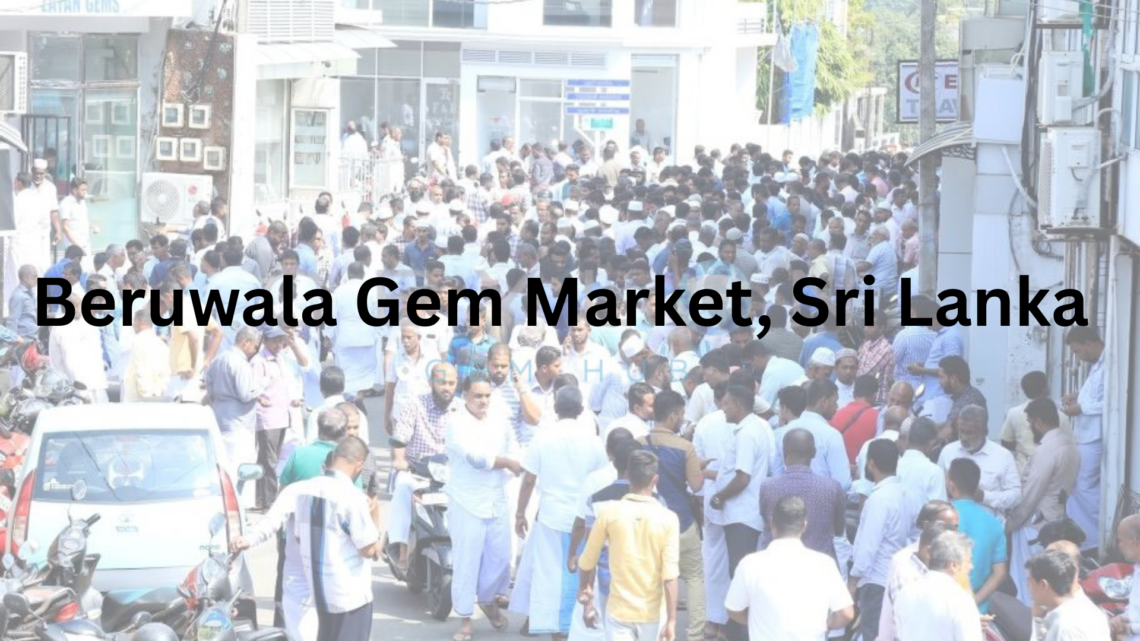
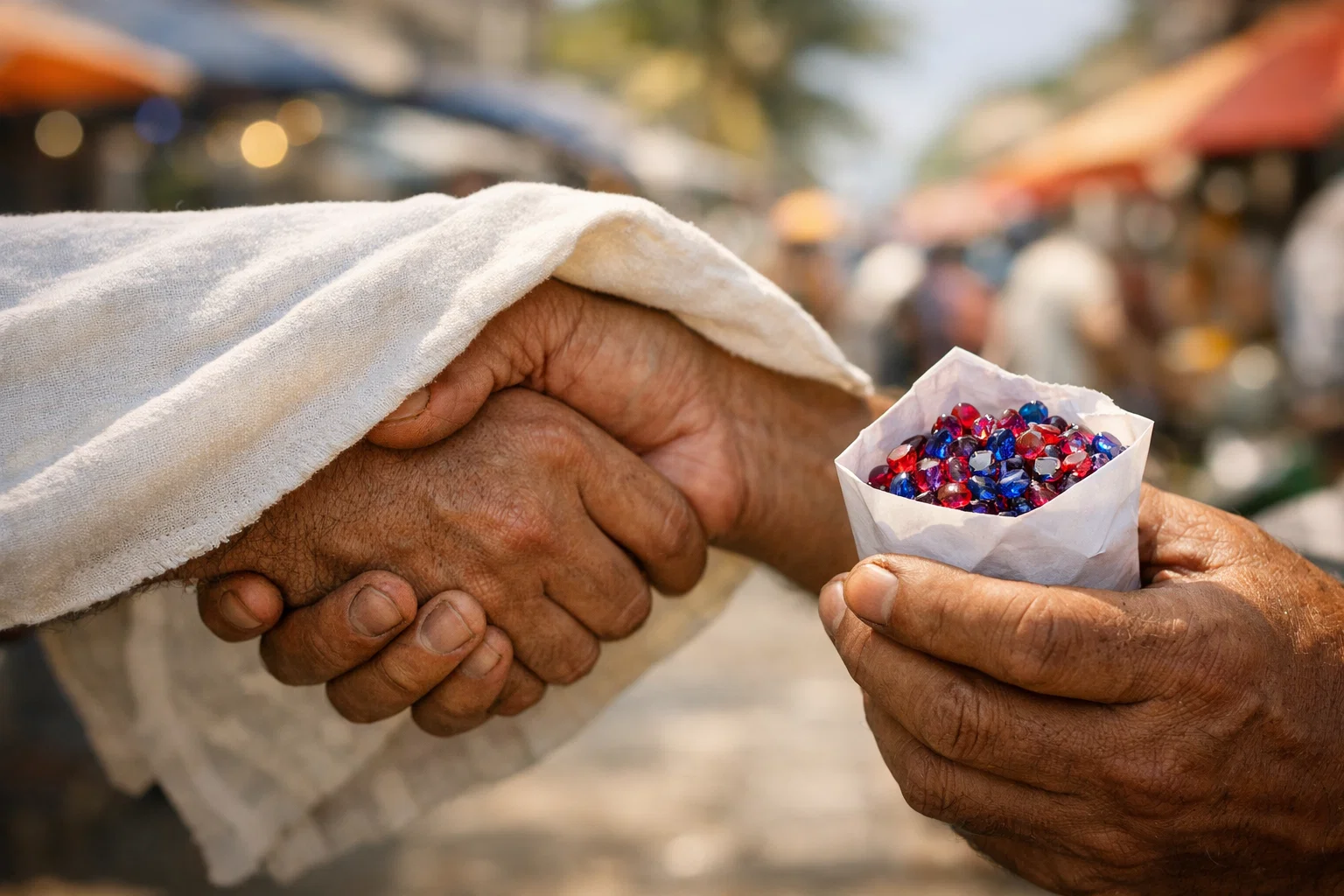
If you walk down Pathe Street on a Wednesday or Saturday morning, the lack of traditional infrastructure may surprise you. There are no velvet ropes, no armed guards, and no glass display cases. Instead, the beauty of an open-air gem exchange is its raw and unfiltered nature. Thousands of dealers, miners, and brokers congregate in the sunlight, each carrying small paper packets that may contain stones worth more than a luxury apartment.
The market functions with a level of efficiency that would baffle a modern economist. Miners from Ratnapura, Elahera, and Pelmadulla travel through the night to bring their rough finds here. They know that this open-air gem marketplace is where the most serious international buyers congregate. It functions as a massive clearinghouse where traders separate rough stones from polished ones and determine a gemstone’s true market value in real time through supply and demand.
The Sun as a Silent Partner in Grading
Why does the world’s oldest gem market remain outdoors? The answer is simple: light. In the world of high-end jewelry, the way a stone interacts with light is everything. Artificial lighting can be used to hide inclusions or artificially enhance the color of a stone. However, in an open-air gem transaction, there is nowhere for flaws to hide. The brilliant Sri Lankan sun provides a full spectrum of light that reveals the true saturation, hue, and clarity of a sapphire.
Traders in Beruwala are famous for their ability to grade stones under the sky. You will see them holding a sapphire against a white cloth or using a simple loupe to catch the sun’s rays. This magic of an open-air gem transaction ensures that the buyer sees exactly what they are getting. If a stone looks magnificent under Beruwala’s harsh midday sun, it will look even better once set into jewelry and worn under the softer lights of a gala or dinner party.
The Global Impact of Beruwala’s Sapphire Trade
While it may look like a local street market, the influence of this open-air gem district reaches every corner of the globe. The prices negotiated on the streets of China Fort literally set the global “spot price” for colored gemstones. When miners discover a significant new “pocket” of sapphires in the interior, the news reaches Beruwala within hours. The subsequent bidding wars in this open-air gem environment dictate what a jeweler in New York or London will eventually pay for that stone.
International buyers from Thailand, who are masters of the heating and cutting process, are regular fixtures here. They rely on the sunlight in the open-air gem district to select the best “rough” material to take back to their laboratories. This international synergy ensures that Beruwala remains at the very top of the global supply chain, serving as a bridge between the raw earth and the refined luxury market. To see how these stones look once they have been expertly curated, you can browse our latest arrivals in the shop.
The Silent Language of the Pathe Gem Merchants
One of the most fascinating aspects of visiting an open-air gem bazaar is witnessing the unique culture of negotiation. This is not a place for loud shouting or aggressive sales tactics. Instead, it is a world of whispers and hand signals. Often, a broker will cover his hand with a cloth while shaking the hand of a buyer, using finger movements to indicate prices. This “silent” negotiation ensures that the high-value deals of the open-air gem world remain private, preventing competitors from knowing the final transaction price.
This level of discretion is built on a foundation of absolute trust. In this community, your reputation is your most valuable asset. If a trader misrepresents a stone or breaks a verbal agreement, the open-air gem community permanently ostracizes them. This self-regulating system has worked for over a thousand years, proving that even in the modern age, integrity remains the most important currency.
A Deep Dive into the Gem Varieties of Beruwala
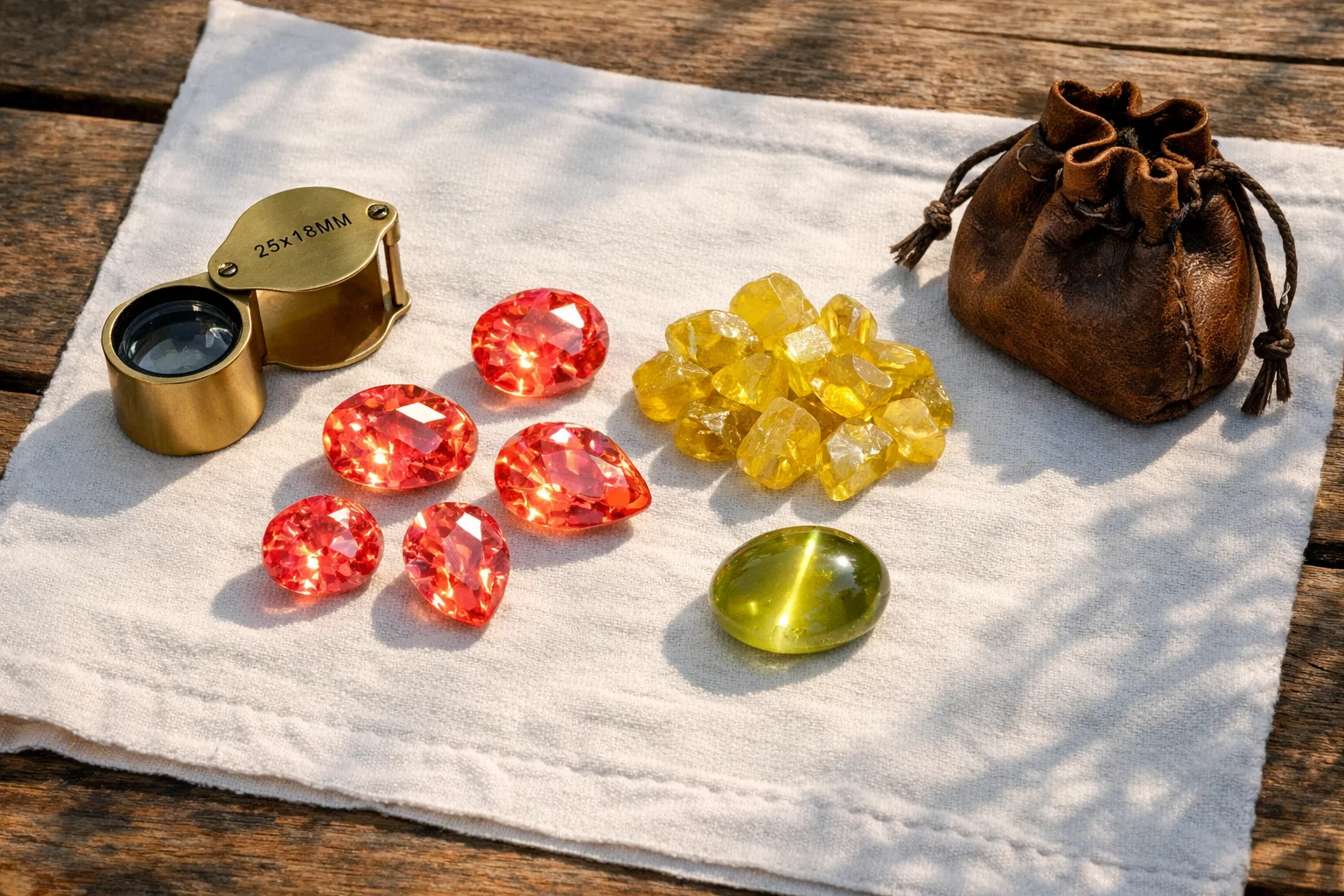
While the Blue Sapphire is the undisputed king of Sri Lanka, the diversity of the open-air gem selection in Beruwala is truly staggering. Visitors and buyers can find:
- Padparadscha Sapphires: These are the rarest of all sapphires, featuring a delicate balance of pink and orange, much like a tropical sunset.
- Star Sapphires: These stones contain tiny needle-like inclusions of rutile that reflect light in the shape of a star, a phenomenon best viewed in an open-air gem setting.
- Alexandrite: A fascinating stone that changes color from green in daylight to red under incandescent light.
- Chrysoberyl Cat’s Eye: Known for its sharp, luminous band that mimics the eye of a cat.
The history of the open-air gem world is written in these stones. Each one tells a story of the geological forces that shaped the island millions of years ago. For those looking to find a specific or rare variety, you are always welcome to contact our team for a personalized search.
Bridging Tradition with Modern Gemological Standards
While the market thrives on tradition, it has also embraced the 21st century. World-class gemological laboratories now support the integrity of the open-air gem community, located just steps from the trading street. After striking a deal under the sun, many buyers immediately take their purchase to a nearby lab to confirm the stone’s origin and treatment status.
The National Gem and Jewellery Authority of Sri Lanka provides oversight to ensure that the industry remains transparent and ethical. Furthermore, global institutions like the Gemological Institute of America (GIA) frequently visit Beruwala to conduct research on the unique inclusions found in Sri Lankan sapphires. This blend of ancient wisdom and modern science ensures that the value found in an open-air gem setting is backed by verifiable facts.
Planning Your Visit to the Gem Capital
If you are a true jewelry enthusiast, visiting this open-air gem landmark should be on your bucket list. The energy is infectious. The street is a sensory experience, filled with the aroma of local tea, the chatter of multiple languages, and the occasional flash of a blue stone catching the light. To see the mastery of the open-air gem dealers at its peak, you should arrive early in the morning, usually around 9:00 AM, when the activity is at its most feverish.
However, a word of caution for the uninitiated: the market can be overwhelming. It is always wise to go with a guide or to purchase through established retailers who have long-standing relationships with the China Fort merchants. This ensures that you are participating in the future of the open-air gem industry in a way that is safe and rewarding.
Ultimately, Beruwala’s legendary open-air gem market is a testament to the enduring beauty of natural stones and the human spirit’s drive to find and refine them. It is a place where the earth’s secrets are revealed, one handshake at a time.
Frequently Asked Questions (FAQs)
Where is the world’s oldest open-air gem market located?
The market is found in the China Fort (Pathe) neighborhood of Beruwala, a coastal town on the southwestern coast of Sri Lanka.
What are the best days to visit the Beruwala market?
The most active trading days are Wednesdays and Saturdays, though some level of trading occurs every day of the week.
Why is it called an open-air market?
It is called an open-air gem market because traders conduct most transactions on the streets and in the open courtyards of the China Fort district, using natural sunlight to inspect stones.
Can I find stones other than Blue Sapphires in Beruwala?
Yes, you can find a vast array of stones including Yellow Sapphires, Rubies, Garnets, Spinels, Tourmalines, and the rare Padparadscha Sapphire.
How do I know if a stone bought in the market is real?
While the community is generally trustworthy, it is standard practice to have high-value stones tested at a certified gemological laboratory, many of which are located in the immediate vicinity of the market.
Is the Beruwala market open to tourists?
Yes, tourists are welcome to walk the streets and observe the trading. However, purchasing requires a high level of expertise or the assistance of a trusted professional.
Why is Beruwala significant to the global jewelry industry?
It serves as the primary clearinghouse for Sri Lankan gemstones, meaning that the prices and quality of stones found here influence jewelry markets from New York to Hong Kong.